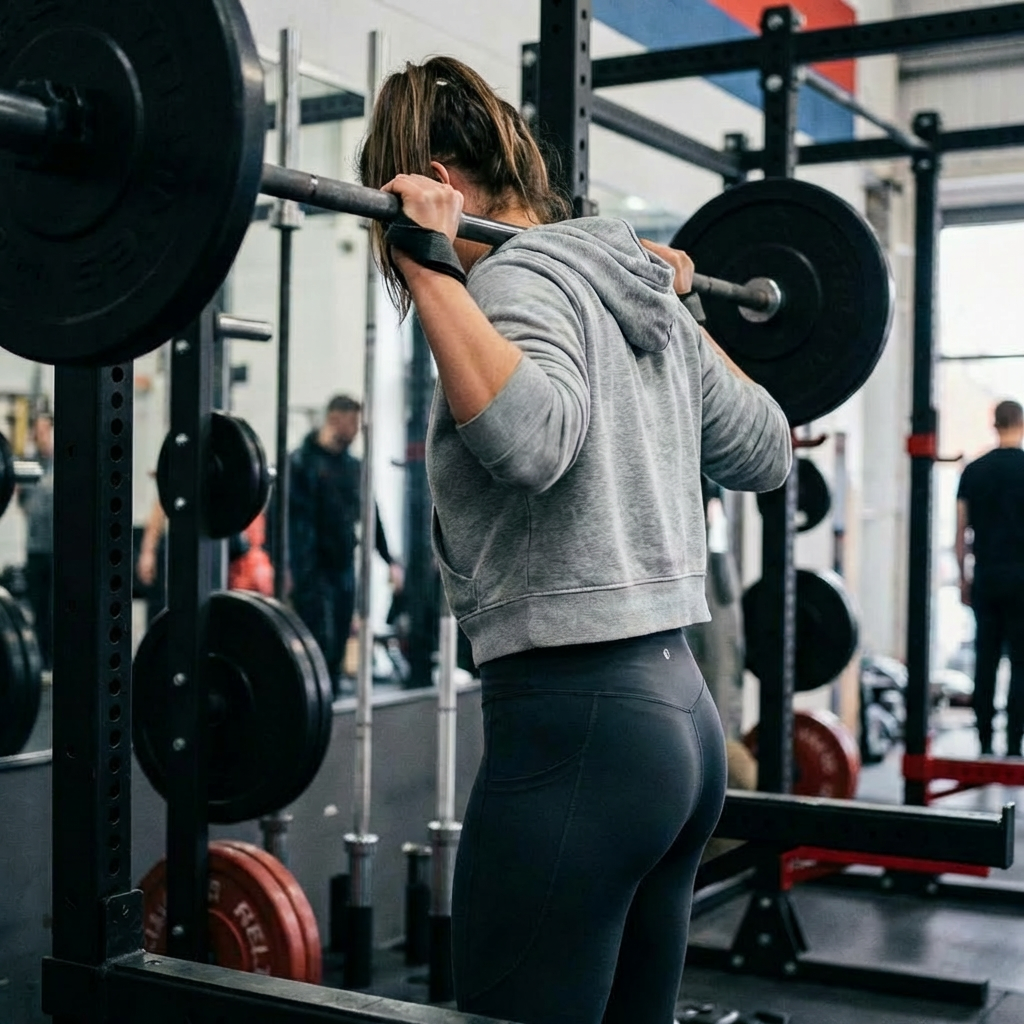
Hormones and Fat Loss for Women
The Truth
Let me say this carefully, because I know this can feel personal.
Hormones matter.
They absolutely influence how you feel, where you store fat, and how your body changes as you age.
But when it comes to hormones and fat loss for women, the conversation has drifted into something unhelpful. Somewhere along the way, “my hormones” became the final answer instead of the starting point.
And I love you too much to let that story go unchallenged.
If fat loss feels harder than it used to, that doesn’t mean your body is broken. It usually means the strategy needs to evolve.
Let’s talk about what’s actually happening.
The Problem: When Hormones Get All the Blame
Over the last decade, the messaging has shifted dramatically. Social media is full of content saying:
- “It’s your hormones.”
- “Your metabolism is shot.”
- “After 40, fat gain is inevitable.”
Now here’s the thing. Hormonal shifts are real.
Every woman is going to be different, but typically estrogen begins to fluctuate in your late 30s and declines through perimenopause and menopause. That can influence where fat is stored and how muscle is maintained. Cortisol (your stress hormone) affects appetite and energy. Thyroid function impacts metabolism. And issues like PCOS can make all of this even more complex.
But here’s what often gets skipped.
Muscle loss accelerates with age if you don’t actively train against it.
According to research from the National Institute on Aging, adults can lose 3–8% of muscle mass per decade after age 30 if they aren’t strength training. That muscle loss is called sarcopenia. All that means is “age-related muscle decline.” Nothing scary. Just loss of muscle.
Less muscle = lower metabolic demand.
Lower metabolic demand = fat loss feels harder.
That’s not mysterious hormone chaos.
That’s physiology.
And it’s reversible.
What’s Actually Happening in Your Body
Let’s simplify this.
Muscle is active tissue. It burns energy even when you’re sitting on the couch. Fat tissue doesn’t. So when muscle decreases and fat increases, your resting metabolism (the calories you burn doing nothing) drops slightly.
Now add:
- Years of cardio-heavy workouts
- Eating too little protein
- Chronic stress
- Poor sleep
And cortisol (your stress hormone) stays elevated. Elevated cortisol over time can increase fat storage, especially around the midsection.
This is where hormones do matter.
But here’s the key distinction:
Hormones respond to stress and lifestyle. They are not random villains attacking you.
In fact, studies show that resistance training improves insulin sensitivity (how well your body manages blood sugar) and can positively influence metabolic health markers (Harvard Health Publishing). That matters because blood sugar regulation plays a role in fat storage and energy stability.
Strength training doesn’t “fix” hormones magically.
It creates an internal environment that supports healthier balance.
Big difference.
Why Old Advice Stops Working After 40
For decades, women were told:
Do more cardio.
Eat less.
Avoid heavy weights.
“Tone” but don’t build.
But cardio alone doesn’t protect muscle. Excessive cardio combined with low calories can actually increase muscle loss. And when muscle decreases, the shape of your body changes in ways that feel frustrating.
I’ve seen this so many times with clients I now work with.
One woman I coached in her mid-40s was doing six “high intensity” classes a week and eating barely 1,300 calories because she thought that was discipline. She was exhausted. The scale wouldn’t move. She blamed menopause.
We shifted her to:
- Three structured strength sessions per week
- Adequate protein
- Less cardio
- More sleep
Within four months, her waist measurement dropped. Her strength went up. Her energy stabilized. She felt calmer.
Her hormones didn’t magically reset overnight.
But her body stopped being stressed constantly.
And that changed everything.
Especially for Women 35–60+
As estrogen declines, muscle retention becomes more important, not less.
Strength training provides what your body needs most during this stage:
- Mechanical tension (that simply means your muscles working against resistance)
- Bone stimulation (important for preventing osteoporosis)
- Metabolic support
- Nervous system resilience
There’s also research showing resistance training helps maintain bone density and muscle mass in postmenopausal women (Journal of Applied Physiology).
Translation?
Strength training isn’t optional after 40.
It’s foundational.
Let’s Address the Common Objections
“But my hormones really are off.”
They might be.
If you suspect thyroid issues, severe symptoms, or major disruptions, see a physician. I always encourage that.
But medical care and strength training are not opposites.
They work together.
“I don’t want to get bulky.”
This one makes me smile every time.
Building significant muscle requires years of intentional effort and a calorie surplus. What structured strength training actually does for most women over 40 is preserve muscle and improve shape.
You don’t look bulky.
You look firm. (Remember, “toned” = Muscle + Lower Fat, so you need the muscle!)
“Cardio is good for you though.”
Absolutely.
Walking is phenomenal for stress and heart health.
But cardio is a tool.
Strength is the strategy.
If your foundation is cardio without muscle, fat loss will continue to feel harder than it needs to.
Strength Is Stewardship
Let me speak plainly here. You are not called to shrink yourself into exhaustion. Your body is not a problem to punish. It’s a gift to steward.
Strength training is not vanity. It’s responsibility. It’s choosing resilience. It’s preparing your body to carry groceries, pick up grandkids, serve your family, and live long with vitality.
God didn’t design you to fade quietly into weakness. But He also didn’t design your body to thrive under chronic stress and starvation.
Stewardship means building wisely.
Practical Starting Point
If you want to support better hormones and sustainable fat loss, start here:
• Lift weights 3 times per week with progression
• Eat adequate protein daily (1-1.3g per kg of bodyweight)
• Walk consistently, but don’t chase exhaustion
• Sleep 7–8 hours
• Reduce unnecessary stress
Simple doesn’t mean easy.
But it works.
Let’s Talk
If hormones have felt like the enemy lately, I want to hear your story.
What has been the hardest part for you?
Energy?
Midsection fat?
Confusion about what actually works?
Drop a comment or send me a message on Instagram. Specific questions are welcome. The more we talk honestly about this, the less power misinformation has.
And if you’re ready for structure instead of guessing, explore your training options here → Work With Me 1:1
Or visit the Services Page to see how we approach strength and fat loss the right way.
Your hormones are not your enemy.
But your strategy might need an upgrade.
Let’s fix that.
Leave a Reply